Thacher, John Boyd
Christopher Columbus, His Life, His Works, His Remains, as revealed by original printed and manuscript records, together with an Essay on Peter Martyr of Anghera and Bartolomé de las Casas, the first Historians of America, Volume I, Parte I, 1903, pp. 189 a 195.

«
189
CHAPTER XXVIII
THE FIRST GENOESE BIOGRAPHERS
The historian can perform no better service than to present
the sources of his information.
(...) Antonio Gallo, the first of
these, was one of the most eminent citizens of Genoa. He was //
190
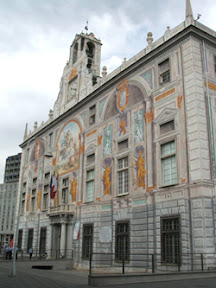
// Chancellor of the Bank of St. George, (1) as his father, Ambrosio,
had been before him, and as his own son, Bernardo, was after
him. From June 14, 1477, until he died he was the official
chronicler of the Republic. The following is his record concern-
ing Christopher Columbus:
"Muratori, Rerum Italicarum, vol. xxiii., p. 301. Antonii Galli.
"De navigatione Columbi per inaccessum antea Occeanum Commentariolus
"Christophorus & Bartholomaeus Columbi, fratres, natione Ligures, ac
Genuae plebejis orti parentibus, & qui ex lanificii (nam textor pater, car-
minatores filii aliquando fuerunt) mercedibus victitarent, hoc tempore per
totem Europam, audacissimo ausu, & in rebus humanis memorabili novitate,
in magnam claritudinem evasere. Hi siquidem intra pueriles annos parvis
literulis imbuti, & puberes deinde facti, de more gentis in navigationes ex-
iverant. Sed Bartholomaeus, minor, natu in Lusitania demum Ulissipone
constiterat, ubi intentus quaestui tabellis pingendis operam dedit, queis ad
usum nauticum justis illineationibus, & proportionibus servatis, maria, por-
tus, littora, sinus, Insulae effigiantur. Proficiscebantur ab Ulissipone quo-
tannis, ac redibant emissa navigia, quae coeptam ante hos annos quadraginta
navigationem per Oceanum ad Occidentales AEthiopes continuatas terras,
gentesque omnibus retro seculis incognitas, aperuere. Bartholomaeus autem
sermonibus eorum assuetus, qui ab alio quodammodo terrarum orbe redibant,
studio pingendi ductus, argumenta, & animi cogitatum cum fratre rerum
nauticarum peritiore communicat, ostendens omnino necessarium. si quis
AEthiopum Meridionalibus littoribus relictis in pelagus ad manum dexteram
Occidentem versus cursum derigeret, ut is procul dubio continentem terram
aliquando obviam esset habiturus. Qua persuasione Christophorus in-
ductus, in aulam Regum Castellae se se insinuans, viros doctos alloquitur, ac
docet, in animo sibi esse, nisi adjumenta defecerint, multo praeclarius, quam
Lusitani fecissent, novas terras, populosque novos, unde minime putetur,
invenire. Haec autem ad aures Regias per hos viros, quibus ea vana non
viderentur, delata, studio glorise, atque cum Lusitanis aemulationis incensos,
Reges perpulere, ut Columbo bina navigia exornari ad eam navigationem,
quam meditatus erat, jusserint. Quibus ille navigiis postquam ab Insulis
Fortunatis Meridiem versus navigaverat, ac jam proximus ei Paralello vi-
deretur, qui sub Cancro est, declinans ad manum dexteram, atque altum,
inaccessum, vastumque petens, omnium navigantium audacissimus com-
plures dies ad Occidentem tenuit. Neec tamen usquam aut Insulae, aut
aliae terrae apparebant, quamvis quadragies centena millia passuum a Gadi-
bus Occidentem versus remotum se se jam esse arbitraretur. Jamque in
desperationem verti audacia coeperat; nam etiam ex comitibus plerique
retro cursuum, ne, si perseverarent, alimenta deficerent, suadebant. Sed
________
(1) It was in his hand as an official of the bank that one finds recorded in the books of
that institution the reception of the two famous holograph letters written by Chris-
topher Columbus.//

191
// ipse animi constans, & vultu intrepidus, turn demum dixit, certum sibi esse,
quod cognitis ac perspectis signis animadverteret, in posterum diem terras
apparituras; dictoque mox fides non deficit: quae illi maximam auctori-
tatem, ac dictorum factorumque omnium posthac fiduciam apud suos
addidit. Insulae erant, ut postmodum ipse per epistolas scripsit, ad septin-
gentas a continenti (quam tamen Insulam nondum circumactis navigiis
arbitraretur) non multum diremtae. Ex his feri quidam homines aliquot
inculunt, quos Canibales appellant, humana carne vescentes, ac Insularum
aliarum Populos latrociniis infestantes. Nam cavatis magnarum arborum
truncis navigantes ad proximos trajiciunt, atque homines quasi feras incibos
venantur. Ex his cavatis arboribus unum in mari nactus Columbus plenum
hujusmodi feris hominibus, non sine proelio, ac magna vi, cum se se accer-
rime defenderent, cepit, captivosque ex his nonnullos in Hispaniam usque
postea pervexit.
"Primam, ad quam appulit, Insulam, Hispaniolam nuncupavit, in qua
multi mortales paupertate ac nuditate conspicui cernebantur. Hos primo
nutibus ad securitatem congressus evocatos, postque donis & omni genere
humanitatis alliciebat. Facile apparebant stupentes novi coloris, novique
habitus alienigenas homines, non tamquam terrigenas, sed tamquam e
coelo demissos admirati. Nulla ibi animalia quadrupedia, praeter canes
quosdam pusillos haberi cognitum est. Alimenta hominum sunt radices
quaedam, & glandes longe alia figura quam nostrae, pares tamen sapore, nisi
essent etiam jucundiores. Aurum modicum collo pendente lamina an-
nexum, & pectori haerente; ac ad usque pudenda quasi velamen paucis
deductum, virorum mulierumque commune. Sed Christophorus quad
maxime quassiverat, consequutum se existimans, retro ad Hispaniam re-
meare quamprimum constituit, ut instructior deinde ad has easdem Insulas
terrasque rediret. Relictis igitur quadraginta ex suis in locum, quem
ceperat, & communiverat, quasi possessionem pro Regibus Castellae adeptus,
& se se mox rediturum pollicitus, linquens littora illa cursum retro ad Ori-
entem, unde venerat, direxit, in Hispaniamque revertitur; nuntiosque
praemisit, quibus omnia a se gesta Reges pernoscerent: quibus ea plusquam
dici posset gratissime fuere. Nam Christophorum delatis honoribus extollen-
tes, & Praefectum Regium totius rei maritimae declarantes, obviam illi miser-
unt clarissimos ex omni Regno proceres, a quibus ad se honorificentissime
deduceretur. Adduxerat ipse ex Barbaris secum aliquot, per quos gestae rei
fides magis confirmaretur. Ceterum ut Reges volebant, fama per omnes
terras interea diflunditur, auro plurimo inventum orbem (quem Indiam
vocitabant) & aromatibus, & plerisque rebus pretiosissimis ad usum vitae
mortalium abundare. Alia igitur navigia pluscula, & minora parantur, &
rebus his instructiora, quibus Barbarorum animi allici magis posse puta-
bantur. In primis autem homines ex omni artificio, & animalia complura
ex omni genere, etiam sues, quorum incrementum mirabile postea fuit. Sed
triticum a semente prima statim ad altitudinem grandiusculam enatum,
antequam spicesseret, evanescens, deperierat. At Regum jussu arma
virique navibus numero duodecim imponuntur, ut vel etiam renitentes//
192
// Barbari ad quodlibet officium cogerentur. Bartholomaeum, ac tertium fra-
trem jacobum in ea expeditione Christophorus secum duxit, classemque
hujusmodi ad Hispaniolam per navigationem dierum non amplius viginti
salvam perduxit; suosque quos reliquerat, ad unum omnes a Barbaris
reperit strangulatos, quod in eorum mulieres injurii fuisse dicerentur.
"Sed Christophorus accepta quidem Barbarorum ingratitudine atque
saevitia, cum his tamen per nova beneficia reconciliatus, dolorem dissimu-
lans, quo ad reliqua destinata animo expeditior progrederetur, de auro
primo inquirit, & de speciebus in nostro orbe pretiosioribus. Aurum modi-
cum, & semen quoddam Piperi persimile & figura & sapore, non multum
colligit. Oppidum adductis materiis aedificat, eique Elisabat nomen in-
didit. Ipse duabus ex omni numero navium assumtis Insulam ipsam cir-
cuit; utque ulteriora pernosceret, litus Johannae, quam Insulam quoque
penetraverat, ita primo adventu nuncupatem, dies unum & septuaginta
pernavigat, Occidentum versus perpetuo cursum tenens. Nullam umquem
navigationem, neque longiorem, neque diuturniorem continuatione fuisse
constat; quippe circiter sexagies centena millia passuum vir nauticus, &
cursus navigiorum aestimator peritissimus confecisse se ex dierum noctium-
que cursu computato, ipsemet in epistolis, quas vidimus manu propria
ipsius subscriptas, prodidit. Ultimum locum Evangelistam nuncupavit.
Remeansque, quantum licuit, sinus, promontoria, portus, atque omne litus
decursum signavit in Tabula. Referebat autem hoc litus elevationem
Aretici Poli decem & octo graduum habere, cum quatuor & viginti.
Septentrionale littus Hispaniolae Insulae Poli ipsius altitudinem ostendat.
Dicebat quando etiani ex observatione suorum, Anno Domini Quarto, &
Nonagesimo & Quadringentesimo supra Millesimum Eclipsim apparuisse
mense Septembris quatuor horis naturalibus ante in Hispaniola quam Hispali
visam fuisse: ex qua computatione colligi licet, cam Insulam horis quatuor,
& Evangelistam, si modo vera referuntur, decem a Gadibus & Hispania
distare; quo modo non amplius duabus horis, hoc est duodecima parte
totius circuli terrarum ab eo loco, quem Bartholomaeus Catigara vocat, &
ultimum habitabilem in Oriente constituit, abesse. Per quas duas horas
si dabitur, non obviantibus terris, posse navigare, ultimus Oriens, omni de-
curso inferiori nostro Emispherio, cursu contrario conjunctus fuerit a ten-
dentibus in Occidentem. Finis.

"Brief Relation of Antonio Gallo Concerning the Voyage of Columbus by Way
of an Ocean Hitherto Unknown
"Christopher and Bartholomew Columbus, brothers, of the Ligurian
nation, sprung from plebeian parentage and who supported themselves
from the wages of wool-working (for the father was a weaver and the sons
were at times carders), at this time acquired great fame throughout the
whole of Europe by a deed of the greatest daring and of remarkable novelty
in human affairs. Even if these had small learning in their youth, when//
193
// they were come of age, they gave themselves to navigation after the manner
of their race. But at length Bartholomew, the younger by birth, estab-
lished himself at Lisbon in Portugal, where for his livelihood he undertook
the production of painted maps adapted to the use of mariners, on which in
correct drawings and their true proportions are represented seas, harbours,
coasts, bays, and islands. Every year there went forth from Lisbon and
returned expeditions by the sea to the Western coasts of Africa, which had
their beginning forty years before, and which revealed continental lands
and peoples unknown in all ages. But Bartholomew, influenced by his
study of maps and familiar with the tales of those who in some manner re-
turned from distant parts of the world, communicated their arguments and
thoughts to his brother, more skilled in maritime matters, disclosing how, as
a matter of necessity, if any one leaving behind him the southern shores of
Africa should direct his course in the open sea to his right hand, toward the
west, he would surely come somewhere on his way upon continental lands.
Christopher, influenced by this reasoning, obtaining admission to the Court
of the Sovereigns of Castile, discussed the matter with learned men and
declared his purpose, unless he failed to secure assistance, to discover much
more easily than the Portuguese had done, new lands and new peoples in
places little thought to hold them. But these things being reported by
these men to the ears of the Sovereigns, to whom they did not seem chimer-
ical, the Sovereigns urged on by a desire for glory and roused to action by a
spirit of rivalry toward the Portuguese, commanded that Columbus should
be supplied with a couple of ships from the expedition which he had planned.
With which ships, after that he had sailed toward the south of the Fortu-
nate Islands and when it seemed that he was on the same parallel, turning
to the right hand and thus directing his course out on the deep, unknown,
and vast ocean, most daring of all navigators, he held on his way toward the
West for many days. Notwithstanding, neither islands nor other lands ap-
peared, although he estimated that he had sailed in the distant sea 4000
miles from the straits of Cadiz. And now courage altered and despair be-
gan, for many of his crew pleaded with him to turn back on his course, lest
if they persevered their supplies should fail. But he himself, constant of
purpose and serene of countenance, declared that he was himself certain,
judging by signs which he knew and recognised, that lands would appear
the following day: and thereupon confidence in him was not wanting: and
this increased his great authority and the faith in his words and deeds
which ever afterward prevailed among his followers. The islands were
seven hundred, as he afterwards wrote in his letters, not very far from the
continent (which he considered the island to be as it had not yet been cir-
cumnavigated by ships). Of these islands some are inhabited by wild men
whom they call cannibals, feeding on human flesh, disturbing the people of
the other islands with their robberies. For they cross over to the neigh-
bouring islands, navigating in the hollowed trunks of trees, and the men are
hunted for food as if they were wild beasts. Columbus, meeting on the sea
with one of these hollowed trees filled with the wild men, captured it, not//

194
// without a struggle and great force, for they defended themselves valiantly,
and when he returned he brought back to Spain with him as captives some
of these. He named the first island on which he landed, Española, in which
were seen many people conspicuous for their poverty and nakedness. He
enticed to him these people, who were crowded together for safety, first by
signs and afterwards by gifts and all kinds of gentleness. They easily ap-
peared affected by their new colour and by men dressed in strange and new
ways, admiring them as not natural to their world but as if sent from heaven.
No quadrupeds are known to be there except certain very small dogs. The
foods of these people are certain roots and acorns longer in shape than ours,
but equal in flavour, unless they might be a little more pleasant. From
their neck and breasts and fastened by a hanging plate they have a little
gold: and some of them have a sort of garment covering their natural parts,
a custom common to both men and women. But Christopher, thinking
that he had found that for which he so eagerly sought, determined to sail
back to Spain in order that with better equipment he might return to these
same islands and lands. Therefore forty of his people being left behind in
the places which he had taken and fortified, taking possession as if for the
Sovereigns of Castile, and promising his people quickly to return, leaving
those shores, he directed his course toward the East, whence he had come,
and returned into Spain: and he sent messengers, from whom the Sovereigns
learned of all that had been accomplished, by which they were pleased more
than it is possible to relate. Extolling Christopher with honours and nam-
ing him Royal Admiral for all maritime affairs, they sent to meet him the
most illustrious men in their whole kingdom, by whom he was most honour-
ably conducted into their presence. He himself had brought with him
some of the savages, by whom he was able to confirm the magnitude of the
thing accomplished. And so the Sovereigns wished that the fame of this
might be disseminated throughout all lands and that the world discovered
(which they called India) abounded in much gold and spices and many
things most precious for the use of mortals. Other ships were prepared,
some larger and some smaller, but better adapted for these things, with
which the minds of the savages might be more easily won. But first of all
they sent men representing every trade and many animals of every kind as
well as sows, whose fertility afterward was marvellous. But wheat from its
first sowing sprang up to a most inordinate height, and then, before it had
blossomed, it withered away. And at the order of the Sovereigns twelve
of the ships in number were loaded with men and arms so that if the savages
resisted they might be brought to whatever employment was best. Chris-
topher took with him on this expedition Bartholomew and a third brother
Jacobus and he conducted his fleet safely to Española by a navigation
lasting not more than twenty days; he found his people whom he had left
behind him strangled to the very last man by the savages because they said
their women had suffered injury.
"But Christopher, enduring the ingratitude and treachery of the savages,
reconciled himself to them with renewed benefits, dissimulating his grief in//
195
//order that he might proceed more expeditiously to the things remaining to
be done: he inquired first for gold and for the things most precious in our
world. He gathered a little gold and a seed like to that of pepper in shape
and flavour. He built a town of materials brought with him, and to it he
gave the name of Elizabeth. He himself, with two vessels selected from all
the fleet, sailed around the island: and as he thoroughly examined the
country farther along, he navigated to the coast of Joanna, which island he
had found, so naming it on his first voyage, sailing along it for one and
seventy days, continually holding a course toward the west. Never has
there been such a navigation nor one of such length, nor one of such dura-
tion, as this sailor man declares that it was of 6000 miles, and he is most
skilled in estimating the courses of navigations, computing the course by
days and nights, as he himself described in his letters which we have seen
written by his very own hand. He named the region farthest distant,
Evangelista. And returning, as he chose, he described on a map the bays,
promontories, harbours, and the entire coast. He reported that on this
coast the Arctic Pole was elevated 18 degrees and on the north side of the
island of Española the elevation was 24 degrees. He declared also from
the observation of his people that when in the year of our Lord 1494 there
appeared an eclipse in the month of September, it was seen in Española four
hours before that it was visible in Spain: from which calculation it may be
deduced that this island is distant four hours and that Evangelista, if they
are correctly reported, ten hours from the straits of Cadiz and Spain: by
which it is estimated that it is not more than two hours, that is the twelfth
part of the whole circumference of the earth, from that place which Bar-
tholomew calls Catigara and the last habitable place to the East. So if it
be possible to sail on these two other hours, no intervening lands occurring,
the farthest East lying directly under our hemisphere will be united in a
contrary course by those going to the westward." »
____________
Ver também:
___________
Imagens:
La fiaccola della Verità, dall'opera Antiquitates Italicae Medii Aev
Eduardo Albuquerque